Wir dokumentieren das Interview hier im englischen Original.
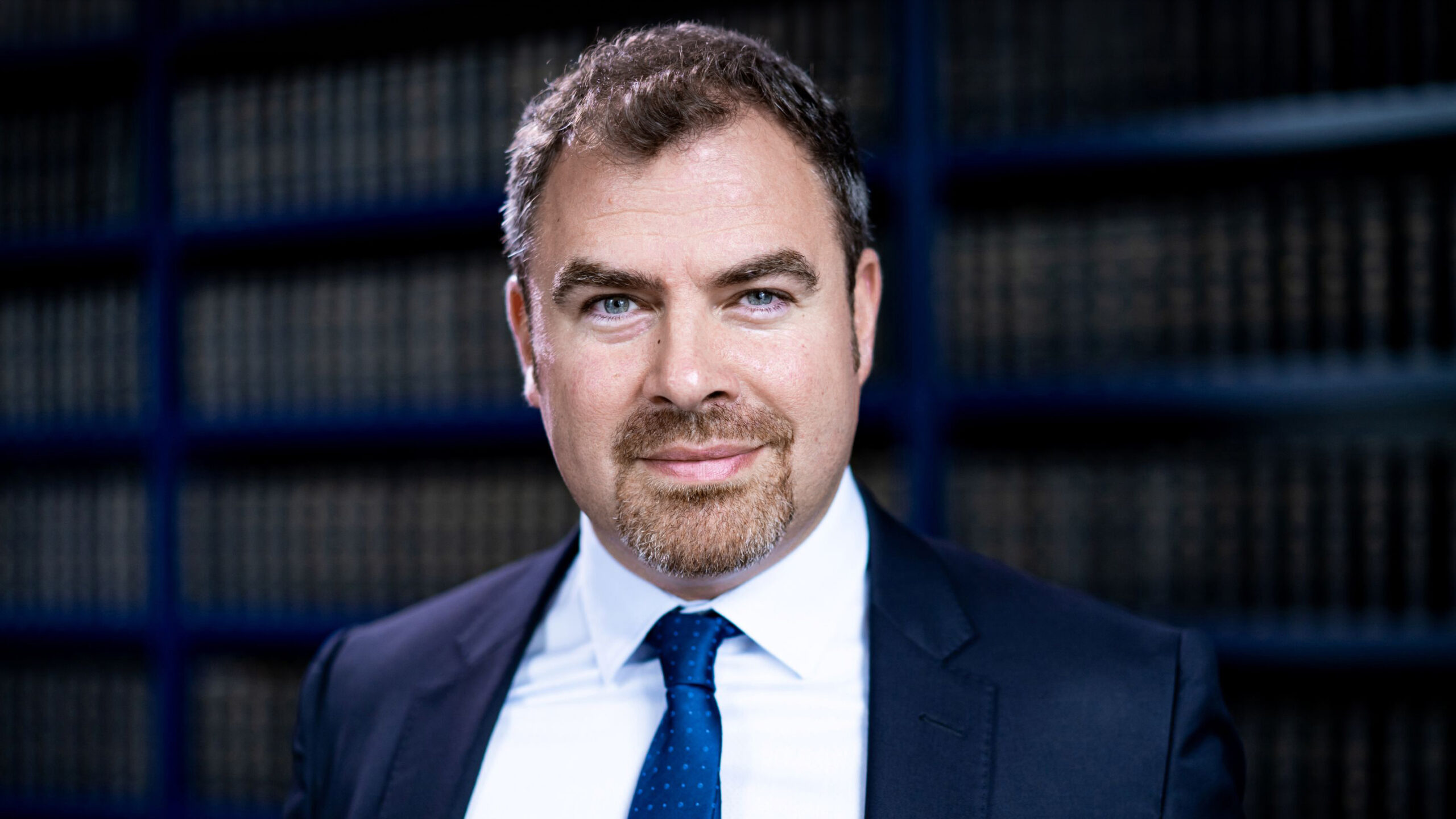
For 60 years, the European Shipowners | ECSA represent the interests of European shipowners in Brussels and beyond. At a time of major transformation — from climate goals to geopolitical challenges and growing competitive pressure — the voice of European shipping has never been more important. On the occasion of ES|ECSA’s 60th anniversary we spoke with Sotiris Raptis, Secretary General of European Shipowners|ECSA, about Europe’s maritime future, the value of unity, and Germany’s role within the European shipping community.
Mr Raptis, ES|ECSA celebrates its 60th anniversary this year. Why was the association founded in the first place, how has it evolved, and what are its main priorities today?
Sotiris Raptis: European Shipowners | ECSA was founded in 1965 as the Comité des Armateurs de Communautés Européennes (CAACE) at a crucial moment in the European integration. The founding members recognised that as the European Economic Community was taking shape, European shipowners needed one voice to engage effectively with emerging EU institutions and ensure that maritime interests were represented in European policymaking. The vision was simple, yet profound; together, we would be stronger than acting individually.
Over the past sixty years, the organisation has consistently demonstrated its commitment to building a strong and competitive European shipping sector. In 1990, the organisation became the European Community Shipowners‘ Associations (ECSA), reflecting a broader representation of European shipping interests. This year, we have taken another significant step with our rebranding to European Shipowners | ECSA, as a clear signal of our sector‘s identity and relevance to Europe‘s economy and global standing.
As we celebrate six decades of being the voice of European shipping, we have much to be proud of—not only in what we have accomplished at policy level, but also in forging a strong sense of community. Because shipping is all about building communities. Embracing change, showing unique flexibility, and operating internationally – these are some of the elements that make shipping different from other European industries. This is what makes shipping unique and a success story for our continent.
Today, European shipping is a cornerstone of Europe’s food, energy and supply chain security. While the EU represents only 15% of global GDP and 5% of the world‘s population, the European fleet makes up around 35% of global tonnage. This figure is a clear signal of the sector‘s strategic importance to Europe‘s economy and competitiveness. Yet, we shouldn’t take this leadership for granted. While European tonnage is growing, other fleets are growing faster. Safeguarding the international competitiveness of European shipping remains our primary priority. Shipping is a global industry that needs one international regulatory framework to ensure a level playing field.
Decarbonisation is a defining challenge, but also opportunity for our industry. To meet our climate objectives while strengthening competitiveness, we must direct investments to European industrial capacity for clean fuels and clean maritime technologies. For instance, the EUR 9 billion generated from the contribution of shipping to the EU ETS should be used to bridge the immense price gap with clean fuels, that are on average four times more expensive. Bridging the price gap would support building up industrial capacity and the production of clean fuels in Europe.
And we should not forget seafarers, who are the backbone of the shipping industry. The green and digital transition will require reskilling and upskilling 250,000 seafarers in Europe alone by the mid-2030s. This is why, together with the European Transport Federation and the European Commission, we established the European Maritime Skills Forum, aiming to discuss the future skills needs for European shipping. Finally, with 90% of European shipping companies being SMEs, we are pushing for regulatory simplification and policies that support rather than constrain our ability to compete internationally. Reducing the reporting burden by at least 25% for all companies and at least 35% for SMEs.
International cooperation can be challenging — as we saw during the recent IMO negotiations, where member states could not reach agreement on key climate measures. How do you assess the outcome, what happens next, and what role can Europe play?
Raptis: Shipping is an international industry which requires meaningful global regulations to decarbonise. Global regulations at IMO level are essential to ensure a level playing field at international level, avoid fragmentation, and to deliver the energy transition of international shipping. The EU should send a clear message on the full alignment of EU climate legislation with an IMO agreement when adopted. The alignment of EU and IMO climate regulations remains a key priority to ensure European shipping remains competitive while leading the global decarbonisation effort.
While we continue to push for an international solution at IMO, we are also pushing the EU policymakers to invest more in the production and availability of clean fuels. The recently published EU Sustainable Transport Investment Plan is a welcome step forward for the decarbonisation of the sector. It highlights the importance of investing national ETS revenues to support the uptake of clean fuels for shipping. However, more decisive action is needed. The EU still needs to introduce a binding requirement and a mandate for European fuel suppliers to make clean fuels available for shipping. Without supply obligations, the sector cannot meet its decarbonisation targets regardless of regulatory ambition.

Across many industries, EU policy is increasingly criticised for excessive bureaucracy and regulatory overreach. In shipping too, European “special paths” — such as the ETS, FuelEU Maritime or MRV regulation — are seen as burdensome. How do you view this?
Raptis: European Shipowners are fully committed to supporting the EU‘s simplification agenda. Excessive reporting requirements and administrative burden undermine competitiveness and innovation.
The Commission‘s Omnibus simplification packages provide important momentum, but we now need to urgently move beyond declarations of good intentions to real commitment and action. For instance, the first simplification package was stuck in the European Parliament for months delaying the process.
Cutting administrative burden is truly needed for the shipping sector and in particularly for the SMEs that make up 90% the sector’s companies. Ensuring alignment of EU ETS and FuelEU Maritime reporting obligations for example, is crucial to avoid unnecessary burdens for companies and to maintain a clear, consistent regulatory framework. The compliance cycles of the two systems are currently not aligned, requiring shipping companies to undertake similar compliance steps regarding the monitoring, verification and reporting of data at different times of the year. Additionally, investing in synergies and increase collaboration with ports and customs is key for the effective implementation of the Maritime National Single Window.
ES|ECSA brings together 22 national shipowners’ associations, all with very different profiles and priorities. How do you manage to build common positions across such diversity?
Raptis: Building consensus across 22 national shipowners‘ associations requires a deliberate, inclusive and structured approach. European Shipowners|ECSA represent all segments of the shipping sector bringing together a diverse membership. While this diversity can present challenges, it is also one of our greatest strengths. It generates innovative ideas and perspectives, all united by a shared vision: to ensure European shipping remains internationally competitive while achieving its decarbonisation goals.
By prioritising dialogue and transparency, ES|ECSA operates through its committees and working groups, where technical experts from our member associations work together on specific policy areas. This allows us to dive deep into the technical details while ensuring every perspective is heard. It‘s in these Committees where diverse viewpoints are exchanged, challenged, and ultimately aligned into robust positions. Our role is to map out where the different views come from, to find common ground, to synthesise different priorities and interests, and come out with a strong voice.
By anchoring our positions in shared priorities, we build consensus that serves the entire European maritime sector. Consensus increases the legitimacy of the organisation towards the European policy makers. When engaging with them, we can demonstrate that our proposals work across different segments and business models. This approach ensures that European shipping policy reflects the realities and needs of the sector as a whole, positioning ES|ECSA as the “voice of European shipping” for sixty years now.
Germany and the German Shipowners’ Association (VDR) were among ECSA’s founding members. How do you see Germany’s role in European shipping today?
Raptis: Germany and the German Shipowners’ Association (VDR) have been and remain a strong pillar of European shipping. As one of ES|ECSA‘s founding members, VDR has played an instrumental role in shaping the voice of European shipping from the very beginning. This commitment reflects Germany‘s position as one of the most outstanding maritime countries. It also shows a deep understanding of shipping as an international industry that requires a unified and strong European approach to succeed in global competition.
VDR brings a strong strategic vision to the work of ES|ECSA, coupled with deep technical expertise across a wide range of topics. The strong support from VDR has only strengthened over the last six decades. Together, we continue to work towards a competitive, sustainable, and strategically important European shipping sector.

Member States should invest the revenues of the EU ETS in the energy transition of the shipping sector, as long as the shipping sector continues to pay for its emissions under the EU ETS.
Sotiris Raptis, Secretary General of ES | ECSA
Finally, looking ahead: What do you wish for ES|ECSA and European shipping in the coming years?
Raptis: First and foremost, shipping is a cornerstone of Europe‘s energy security, food security, and supply chain resilience. Recent geopolitical events have clearly shown the strategic importance of shipping for Europe’s security. Ensuring the international competitiveness of European shipping, investing in open trade and avoiding protectionist measures in the future is essential. A fit-for-purpose regulatory and taxation framework is crucial to ensure that EU shipping companies remain globally competitive. The upcoming European Maritime Industrial Strategy should strengthen the strategic role of shipping and ensure its international competitiveness.
The energy transition of shipping cannot succeed without clear, stable frameworks that allow long-term investments in clean fuels and technologies. We need to see a clear alignment between EU climate legislation and IMO global measures. Investments in clean technologies and fuels must be encouraged to make the European maritime industrial cluster more competitive internationally.
The availability of fuels in the market is one of the most critical challenges for the shipping sector in the coming years. We need a binding mandate on fuel suppliers at EU level to produce the maritime fuels needed to comply with the FuelEU Maritime targets in sufficient quantities. Member States should invest the revenues of the EU ETS in the energy transition of the shipping sector, as long as the shipping sector continues to pay for its emissions under the EU ETS. National ETS revenues should be invested in the uptake of clean maritime fuels and clean maritime technologies.
Finally, we need to make shipping careers more visible, more accessible, and more appealing to young generations. This means investing in maritime education, promoting diversity and inclusion and showcasing the opportunities that our industry offers. Ultimately, shipping is all about building communities. Throughout the years, we have established coalitions with key industry stakeholders, creating robust networks that amplify our collective impact. We have worked together with other maritime industry associations, but we have gone a step further, setting up new coalitions with the aviation and fuel sectors.
We have also reached beyond industry by joining forces with environmental organisations and unions. Through the European Maritime Skills Forum, the Clean Maritime Fuels Platform, and our strong coalition with the shipbuilding sector, we have created diverse networks aiming to identify common challenges and concrete solutions for the industry’s transition.

Sotiris Raptis – Secretary General ES|ECSA
Sotiris Raptis took his first steps in the world of shipping as a policy advisor in the European Parliament back in 2010. He joined ECSA as Director of Environment and Safety in 2020 and took on the role of Secretary General in 2022. Before leading ECSA, Sotiris held several positions in different stakeholder organisations, such as the European Sea Ports Organisation and the NGO Transport & Environment. Sotiris is a qualified lawyer, with degrees from the University of Thessaloniki, the University of Athens and King’s College London. In 2008, he was awarded the European Citizen’s Prize of the European Parliament as member of the “G700” blog for promoting intergenerational justice. When he is not talking about shipping, he takes care of his garden and he explores new culinary destinations in Brussels.

60 Years of European Shipowners | ECSA
European Shipowners | ECSA is the voice of the European shipping industry. Founded in 1965 as “Comité des Associations d’Armateurs des Communautés Européennes (CAACE)”, ES | ECSA promotes the interests of 22 member associations of the EU and Norway. ES | ECSA strives for a regulatory environment that fosters the international competitiveness of European shipping.
ES | ECSA has a Board of Directors, four specialised committees, a number of working groups and task forces, targeting specific issues, and a permanent Secretariat based in Brussels.
Europe is facing an existential transformation as it strives to meet climate neutrality by 2050 while maintaining industrial leadership at global level. The Green Deal Industrial Plan and the proposed Net-Zero Industry Act have put forward ambitious measures to strengthen Europe’s security by fostering green technology manufacturing, green transport, just transition and open trade.
Shipping is a cornerstone of Europe’s security – from energy to food and supply chain security. The European shipping fleet is one of the largest in the world, representing 35% of the world fleet enabling the EU to play a leading role in the global supply chains. Shipping delivers the goods we need, supports EU exports and connects European citizens within Europe and with the rest of the world.